Nutrition work is never a one-sided conversation. It's a dialogue built on mutual respect, clear boundaries, and honest adaptation. We believe that real change happens when both sides show up: you with your lived experience, your challenges, your rhythms; us with evidence-informed guidance, attentive listening, and flexibility.
"Your responsibility is to notice, report, and stay curious. Our responsibility is to listen, adjust, and support without judgment."
This isn't treatment. We're not fixing you. We're exploring steady habits that fit your life—not the other way around. The process works best when there's trust, transparency, and a shared commitment to sustainable change. That means no pressure, no guilt, and no promises of rapid transformation.
We're here because food matters, and so do you. Let's work together.
Life is busy. The habits that stick aren't the ambitious ones—they're the small, repeatable anchors that fit naturally into your existing rhythm.
Think of anchors as tiny decisions that become automatic: the glass of water first thing. The same time lunch appears most days. The pause before reaching for a snack. These aren't rules. They're touchstones.
"Anchors work because they're so small you can't fail at them. Failure requires effort. Anchors require simply noticing."
The most powerful anchors are the ones you choose—not because they're trendy or "optimal," but because they genuinely fit your day. A morning routine that matters to you. A meal prep rhythm that feels manageable. A drink of water that signals a transition.
Snack Moments: Without 'All or Nothing'
Snacking often becomes a battleground: either you're "good" and eat nothing, or you're "bad" and eat everything. Both extremes miss the point.
A snack moment is simply a pause to ask: Am I physically hungry? What do I actually want? What's available that feels genuinely good right now?
"Permission isn't permission to eat everything. It's permission to eat something because you choose it, not because you're restricting or rebelling."
When snacking happens without shame or rules, something shifts. You stop eating to "get it over with." You start eating because the choice is real. And when the choice is real, the amount typically becomes reasonable.
Gentle Boundaries: So the Process Stays Calm
Boundaries aren't restrictions. They're the container that keeps the work sustainable.
"What this work is: partnership, adaptation, steady support, honest conversation, realistic timelines. What it isn't: medical treatment, diagnosis, guaranteed results, quick fixes, shame-based motivation."
We're here to explore steady habits, not to:
Diagnose or treat medical conditions
Prescribe medications or supplements
Promise specific health outcomes
Replace professional medical advice
Provide therapy or mental health treatment
Why boundaries matter: They protect the integrity of our work. They keep expectations clear. And they remind us both that sustainable change is built on realistic timelines and honest limitations.
About Us
Domina is an advisory blog focused on nutrition guidance built through partnership. We work with people who are ready to explore calmer, more sustainable approaches to food—not through restriction or extremes, but through dialogue, adaptation, and steady support.
We believe that real change happens when nutrition work is a two-sided conversation. You bring your lived experience, your challenges, your honesty. We bring evidence-informed perspective, attentive listening, and flexibility. Together, we explore habits that actually fit your life.
This isn't medical advice. This isn't treatment. This is thoughtful, partnership-based nutrition guidance grounded in realistic expectations and shared responsibility.
Important: The information presented on this site is for informational purposes only and is not medical advice. It is not a substitute for professional medical consultation. If you have questions about your health or medical conditions, please consult a qualified healthcare provider.
The Process, Step by Step
Our approach follows a clear, honest sequence:
1
Clarify
2
Observe
3
Adjust
4
Support
5
Review
Clarify: We talk through your actual daily rhythm, your relationship with food, what's worked before, what hasn't. No assumptions.
Observe: You notice patterns over 1–2 weeks without changing anything. We're gathering honest data, not judging.
Adjust: Based on what you've seen, we propose small, specific changes—just one or two at a time.
Support: We check in, troubleshoot, adapt when needed. This isn't a solo journey.
Review: We look back at what shifted, what stayed the same, what feels sustainable. Then we decide next steps together.
One of the simplest, most powerful habits is a weekly pause to notice what happened—without judgment, without blame. This isn't a weigh-in or a test. It's a quiet moment to observe.
Monday
Check in: What feels manageable this week? Any challenges ahead? What worked well last week?
Wednesday
Notice: How are your anchors showing up? What surprised you? Any patterns emerging?
Friday
Reflect: What's moving in the direction you want? What feels stuck? Where do you need support?
Sunday
Plan: What will next week look like? What's one thing you want to test? What do you need to feel grounded?
This rhythm works because it's gentle, regular, and focused on honest observation rather than perfectionism. You're not aiming to "do it right." You're aiming to see what's actually happening.
Real nutrition work shows up in everyday moments. Here are scenes from daily life where steady habits make a difference.
Preparing a Simple Lunch at Home
A few ingredients, enough time, no pressure. This is where anchor habits show up: the ritual of cooking, the care in choosing what's in front of you, the pause before eating.
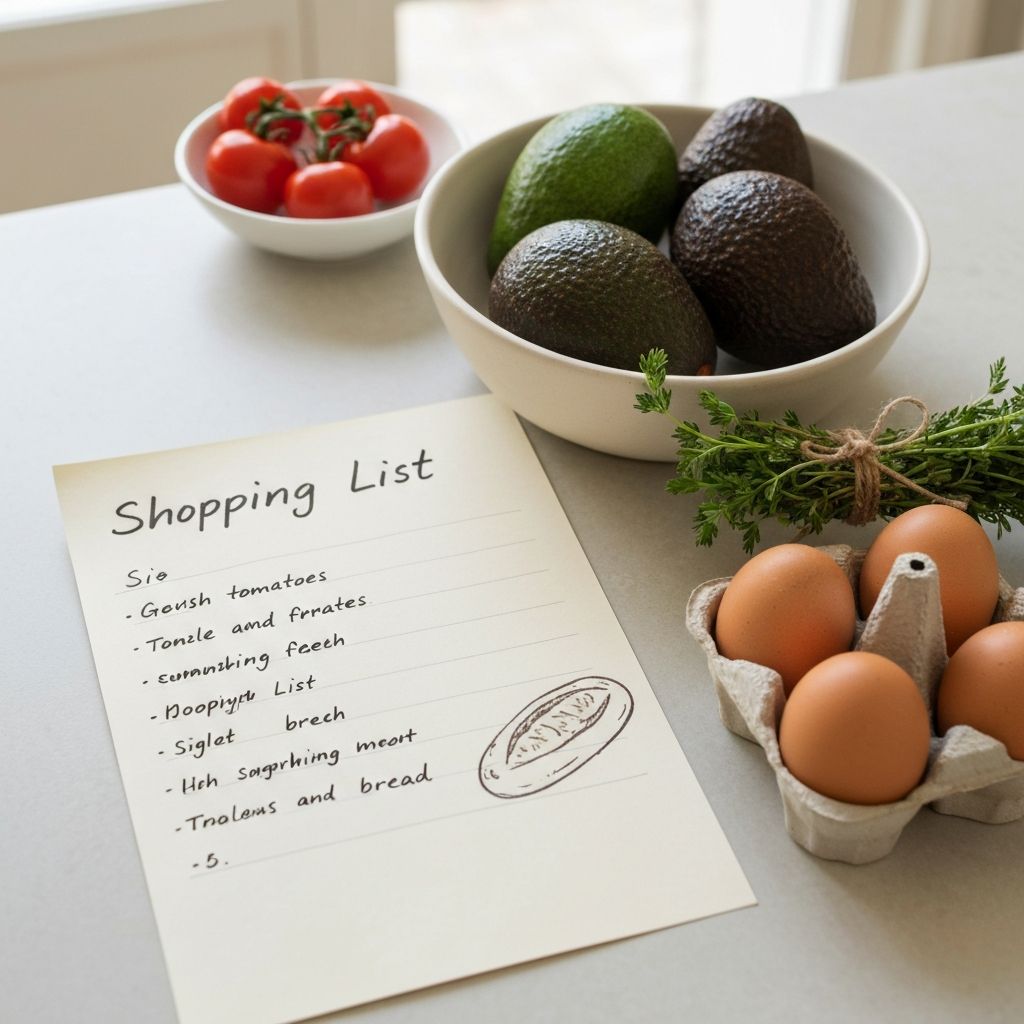
Choosing Food at the Supermarket
A moment of real choice. What do you reach for? Why? The freedom to notice without guilt changes how you shop and how you feel.
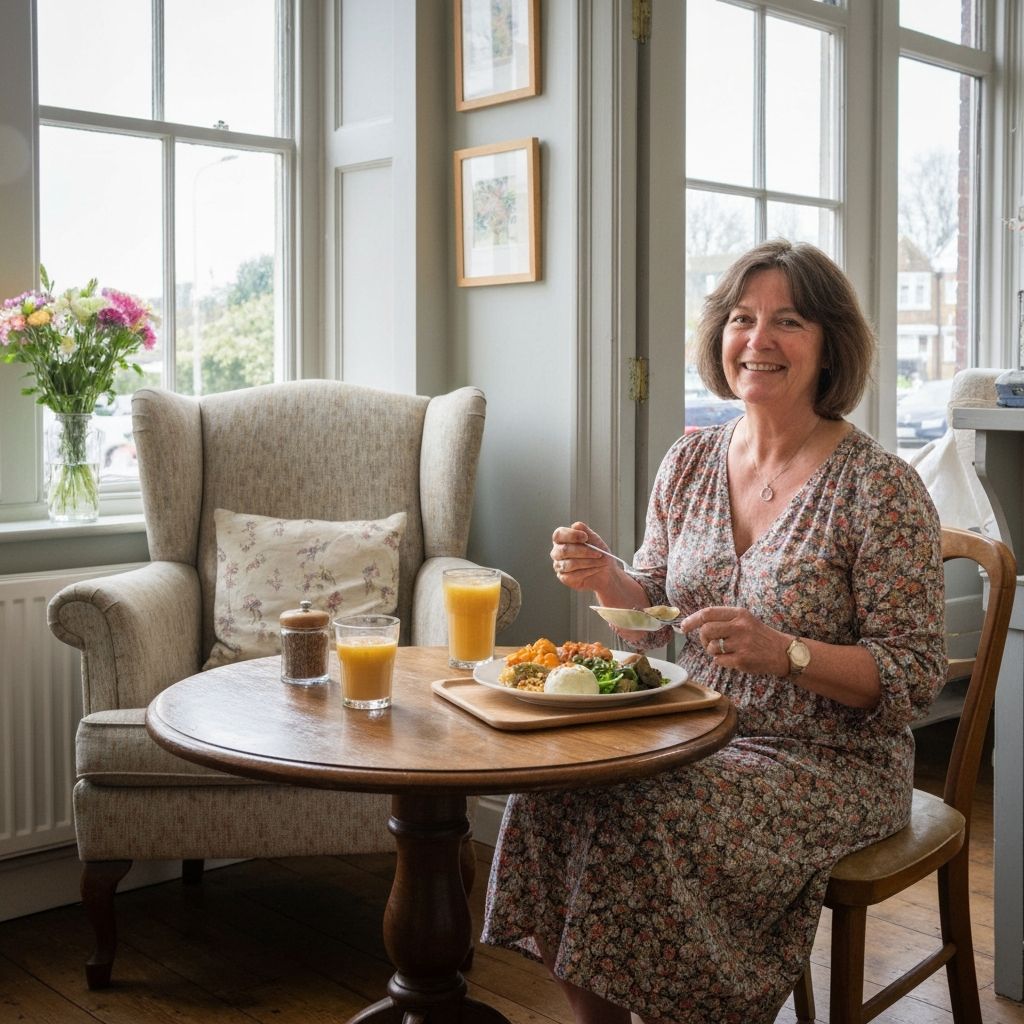
A Relaxed Café Lunch
Food shared with others, without agenda. This is where nervous system settles, where eating is connected to pleasure and presence, not performance.
Sharing Dinner at Home
Food as connection. When eating is relational rather than transactional, it lands differently. This is where trust in the process actually lives.
Have questions about our approach or want to explore working together? We're here to listen.
Thank you for reaching out. We've received your enquiry and will be in touch shortly.
This form is used for information and enquiry purposes only. We do not sell directly through this form and will only use your information to respond to your enquiry.
Contact Information
Domina
63 Princes Street Edinburgh EH2 2DG United Kingdom
Domina ("we," "us," "our," or "Company") operates the website at www.domina.info. This Privacy Policy explains how we collect, use, disclose, and safeguard your information when you visit our website.
2. Information We Collect
Through our contact form: If you complete our enquiry form, we collect your email address to respond to your message. This information is used solely for responding to your enquiry and providing support.
Automatically through cookies and analytics: We use standard analytics tools to understand how visitors use our site. This helps us improve our content and user experience. We do not collect personal identifying information through these tools.
3. How We Use Your Information
To respond to enquiries submitted through our contact form
To improve website functionality and user experience
To comply with legal obligations
4. Data Security
We implement appropriate technical and organisational measures to protect your information against unauthorised access, alteration, disclosure, or destruction. However, no method of transmission over the internet is 100% secure.
5. Third-Party Links
Our website may contain links to third-party websites. We are not responsible for the privacy practices of those sites. We encourage you to review their privacy policies.
By accessing and using this website, you accept and agree to be bound by the terms and provision of this agreement. If you do not agree to abide by the above, please do not use this service.
2. Use License
Permission is granted to temporarily download one copy of the materials (information or software) on Domina's website for personal, non-commercial transitory viewing only. This is the grant of a license, not a transfer of title, and under this license you may not:
Modify or copy the materials
Use the materials for any commercial purpose or for any public display
Attempt to decompile or reverse engineer any software contained on the website
Remove any copyright or other proprietary notations from the materials
Transfer the materials to another person or "mirror" the materials on any other server
3. Disclaimer of Warranties
The materials on Domina's website are provided on an "as is" basis. Domina makes no warranties, expressed or implied, and hereby disclaims and negates all other warranties including, without limitation, implied warranties or conditions of merchantability, fitness for a particular purpose, or non-infringement of intellectual property or other violation of rights.
4. Limitations of Liability
In no event shall Domina or its suppliers be liable for any damages (including, without limitation, damages for loss of data or profit, or due to business interruption) arising out of the use or inability to use the materials on Domina's website.
5. Accuracy of Materials
The materials appearing on Domina's website could include technical, typographical, or photographic errors. Domina does not warrant that any of the materials on its website are accurate, complete, or current. Domina may make changes to the materials contained on its website at any time without notice.
6. Links
Domina has not reviewed all of the sites linked to its website and is not responsible for the contents of any such linked site. The inclusion of any link does not imply endorsement by Domina of the site. Use of any such linked website is at the user's own risk.
7. Modifications
Domina may revise these terms of service for its website at any time without notice. By using this website, you are agreeing to be bound by the then current version of these terms of service.
8. Governing Law
These terms and conditions are governed by and construed in accordance with the laws of Scotland, United Kingdom, and you irrevocably submit to the exclusive jurisdiction of the courts located in Scotland.
9. Contact Us
For questions about these Terms of Service, contact us at:
Cookies are small pieces of data stored on your device when you visit a website. They help websites remember your preferences and improve your experience.
2. Cookies We Use
Essential Cookies: These cookies are necessary for the website to function properly. They include:
Session cookies to maintain your browsing session
Cookie consent preference cookies
Security and fraud prevention cookies
Analytics Cookies: We use analytics tools to understand how you interact with our website. This helps us improve our content and user experience. These cookies do not identify you personally.
3. Managing Your Cookie Preferences
Most web browsers allow you to control cookies through your browser settings. You can set your browser to refuse cookies or alert you when cookies are being sent. Please note that some features of our website may not function properly if cookies are disabled.
4. Third-Party Cookies
We do not allow third parties to place tracking cookies on our website without your consent.
5. Consent Mode v2
Our website uses Google's Consent Mode v2, which allows you to control how your data is processed based on your cookie preferences. You can update your preferences at any time through the cookie banner at the bottom of the page.
6. Contact Us
For questions about this Cookie Policy, contact us at:
The information provided on this website is for informational and advisory purposes only. It is not intended as, and should not be construed as, medical advice, diagnosis, or treatment. Domina is a nutrition advisory blog, not a medical service or healthcare provider.
What This Website Does Not Do
This website does not:
Provide medical diagnosis or treatment
Replace professional healthcare advice
Prescribe medications or medical procedures
Provide psychological or mental health treatment
Guarantee any health outcomes or results
Treat, cure, or prevent any disease or medical condition
When to Seek Professional Help
If you have any health concerns, medical conditions, or symptoms, please consult a qualified healthcare provider. If you are taking medications, please consult your doctor or pharmacist before making any significant dietary changes.
Limitations
The information on this website is based on general nutritional principles and should not be applied to specific medical situations without professional guidance. Individual health needs vary, and what works for one person may not be appropriate for another.
Liability Waiver
Domina and its representatives are not responsible for any adverse effects, complications, or damages resulting from the use or misuse of information provided on this website. By using this website, you agree that you do so at your own risk.
Changes to Information
Information on this website may be updated or corrected at any time without notice. While we strive for accuracy, we do not guarantee that all information is current or complete.
Contact Us
If you have questions about this Health Disclaimer or concerns about information on our website, please contact us at:
We use cookies to improve your experience on our website. By continuing to browse, you consent to our use of cookies. Read our Cookie Policy to learn more.